Halfway between Venice and Verona, Padua is a part of the most beautiful cities to visit in Veneto and is the choice step during a circuit and Italy. I had the opportunity to go there last winter. If February is not the best month to visit Italy, I was lucky enough to discover Padua away from the crowds.
My time in Padua was quite limited – I only had a few free hours to devote to exploring this magnificent city which would be worth at least a full day’s visit if you wanted to take the time to visit its museums.
In this article, I invite you to discover what to do and see in Padova in one day.
A practical guide to visiting Padua in one day
How to get to Padua?
Padua is a city located in northern Italy not far from Venice. You can easily reach Padua by train from many cities in northern Italy, as Padua is on the Milan-Venice line.
Padova (in Italian Padova) takes about 2 hours by train from Milan Central Station and 25-30 minutes from Venezia Santa Lucia Station.
It also serves Padua regular buses from Marco Polo Airport in Venice. Departures are every 45 minutes from 5:30 a.m. to 11:30 p.m. The journey takes 40 minutes
Where to park in Padua?
Like almost all Italian cities, The center of the city of Padua is ZTL : restricted traffic zone (or zona a traffico limitato in Italian). What does that mean only authorized vehicles are allowed to enter. Returning there with your vehicle is a guarantee of getting a fine at the end of your stay (if it’s a rental car, administration fees are added!) In short, it’s better to avoid going there and get rid of your vehicle as soon as possible.
For my part, I parked at the “Car Park Padova City Centre” parking lot, located on Via Trieste. I recommend it, it is very practical and the access is then quite fast to the city center. It’s a stone’s throw from the Scrovegni Chapel, which is a must-see (but one I didn’t have time to do during my visit).
Where to sleep in Padua?
If you want to extend your stay in Padova, I offer you this selection of accommodation in different ranges of prices and comfort
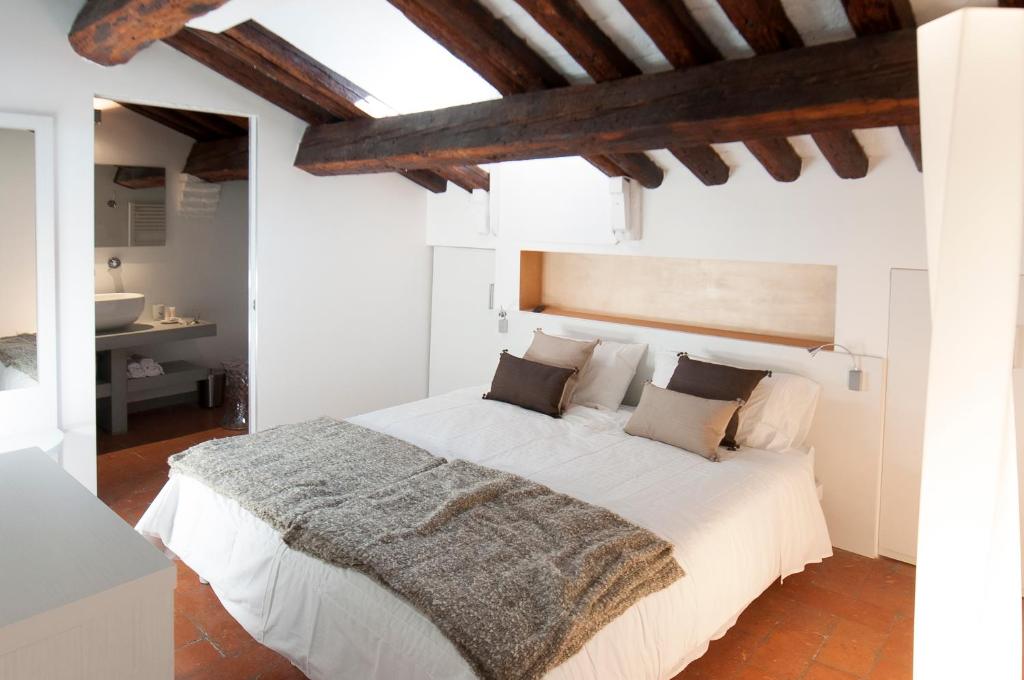
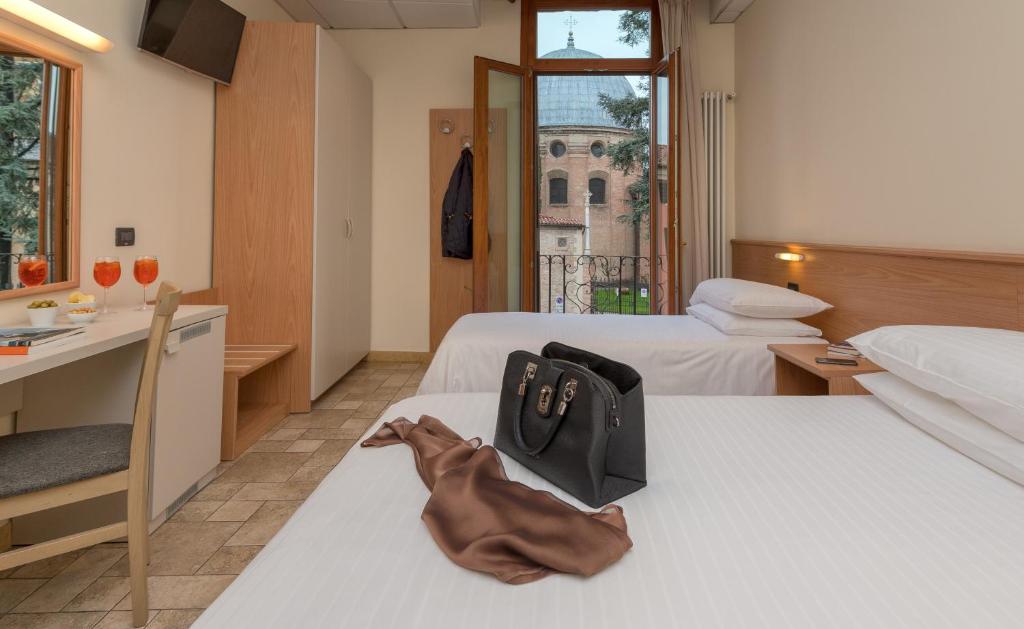
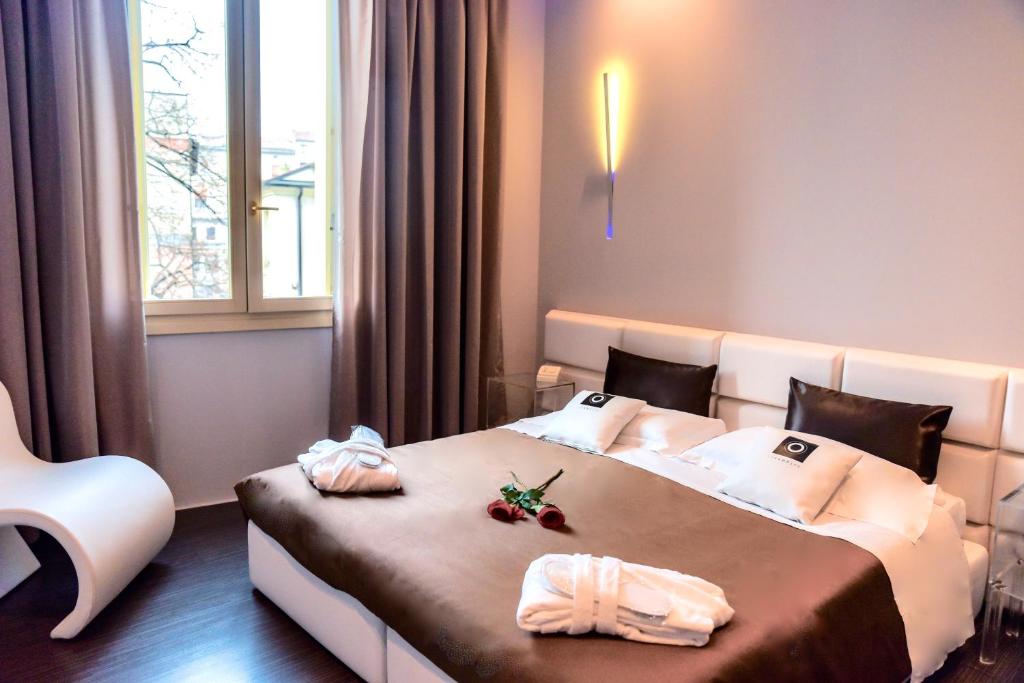
Find more choices of hotels to stay in Padua using the interactive map below:
What to do, what to see in Padova in one day?
Basilica of St. Anthony of Padua
If you have very little time to devote visit to Paduaof course I advise you to discover extraordinary Basilica of St. Anthony of Padua (not to be confused with the Duomo in Padua!).
The basilica is located south of the city center and is a bit out of the way, but as you will see, it is worth the walk to discover it.
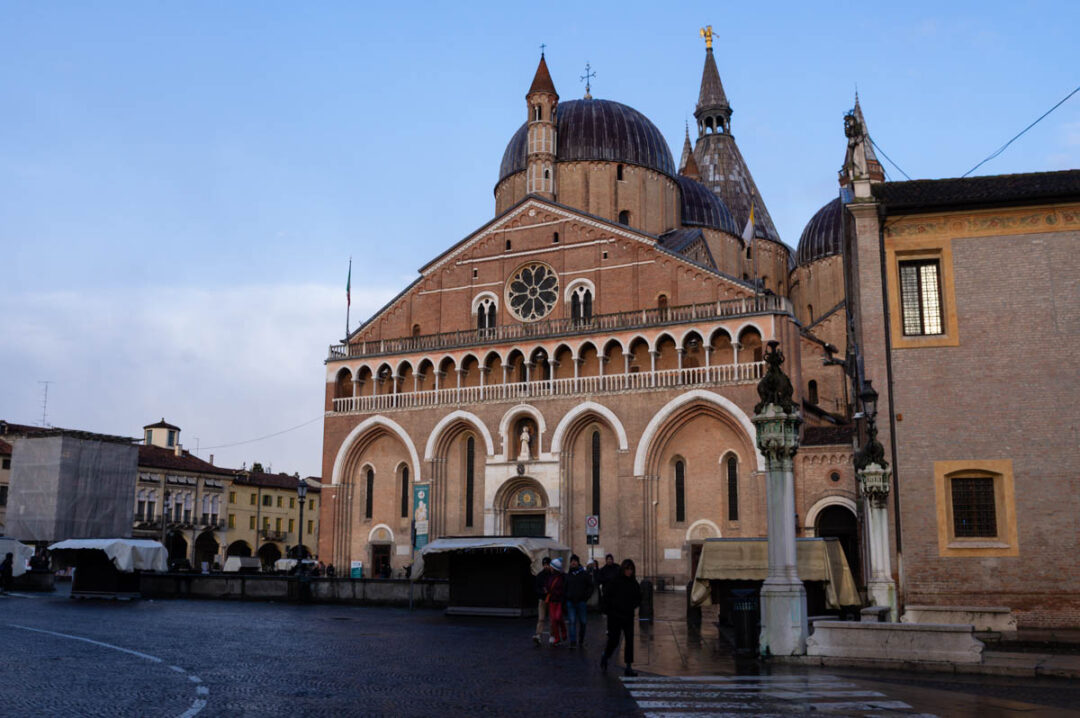
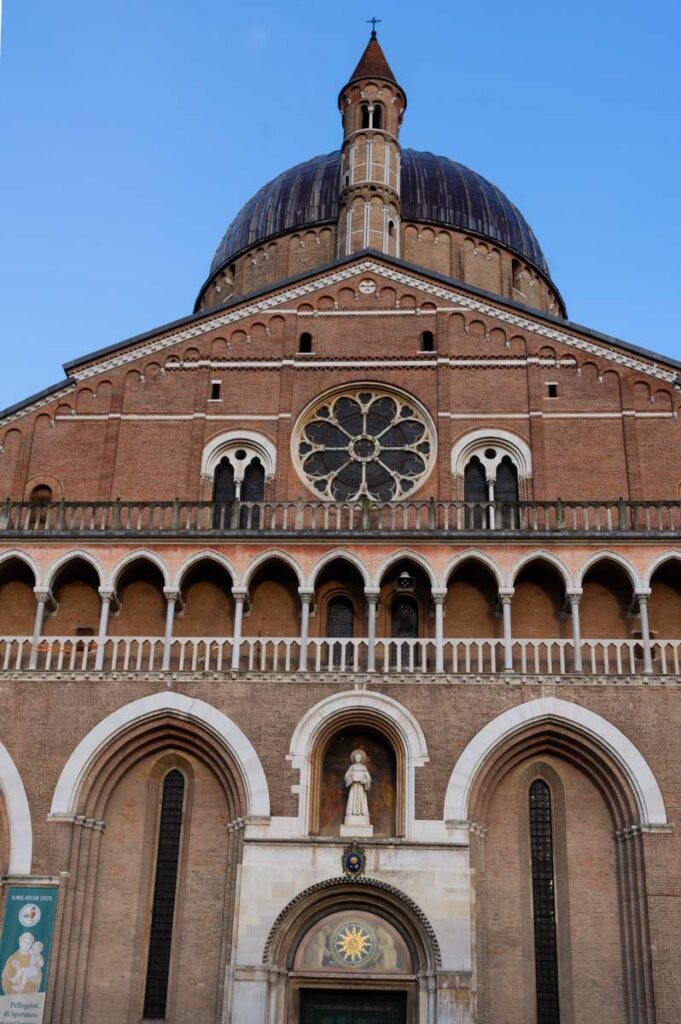
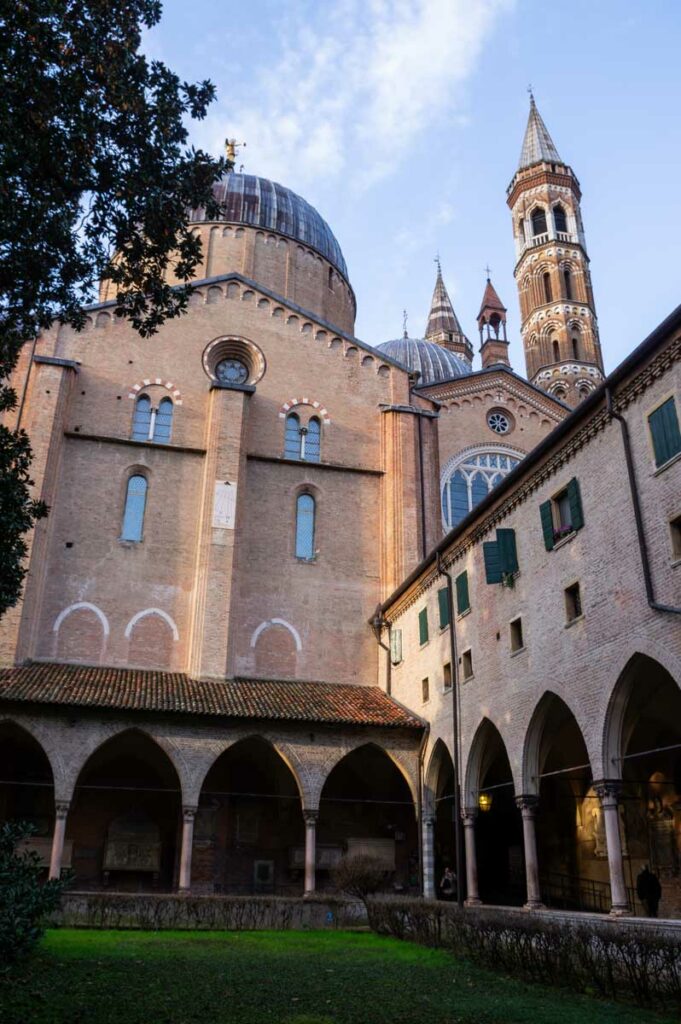
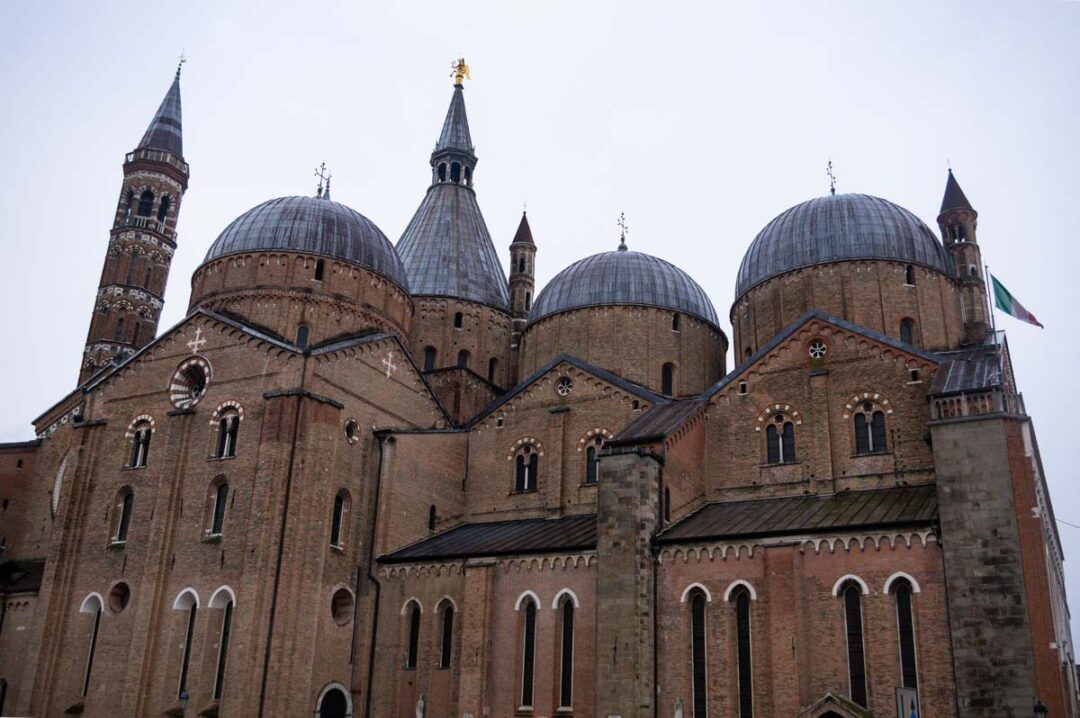
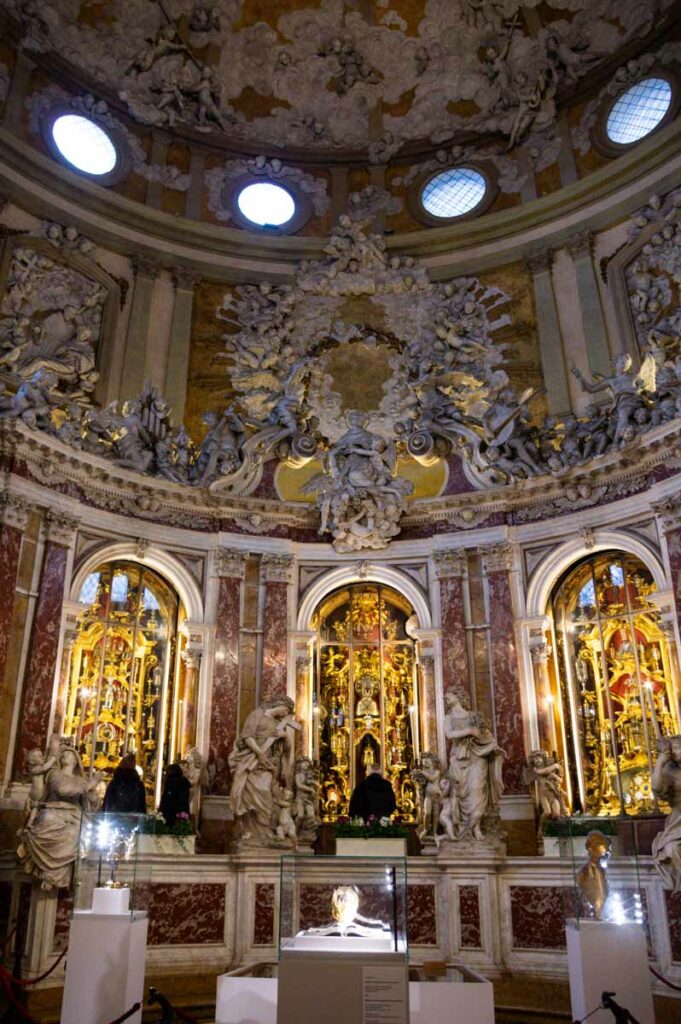
If the brick building seems a bit austere at first glance, inside it is an explosion of colors. The basilica is completely decorated with frescoes from floor to ceiling. I hadn’t read anything about the basilica before my visit so I can tell you that I was in awe when I walked through the gates!
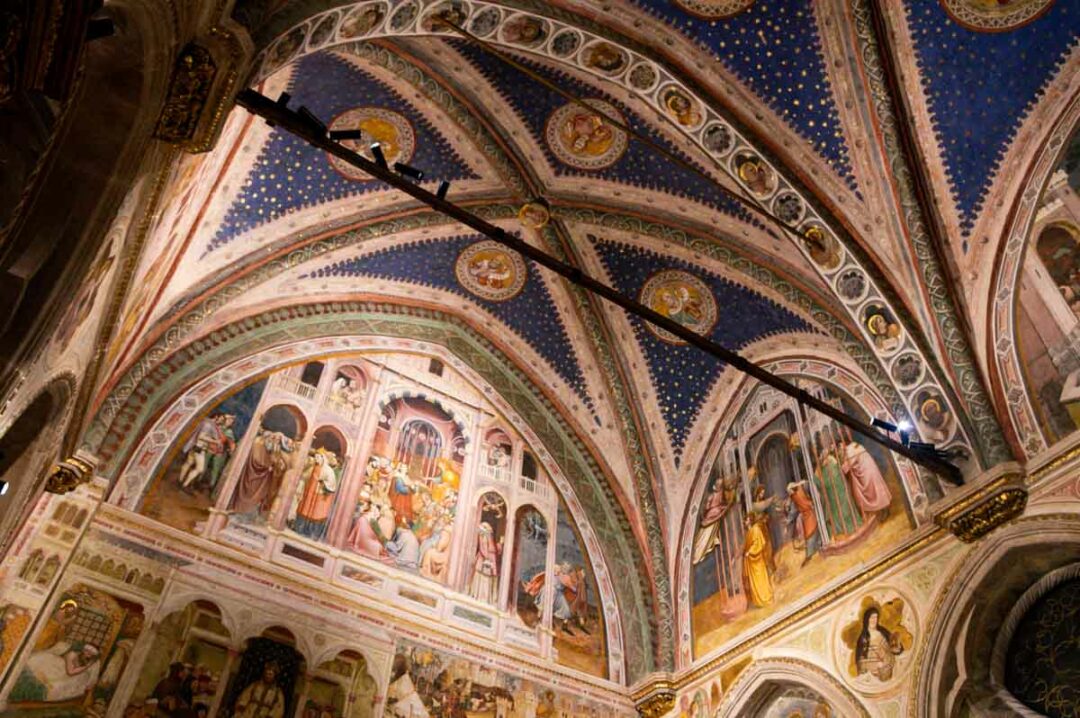
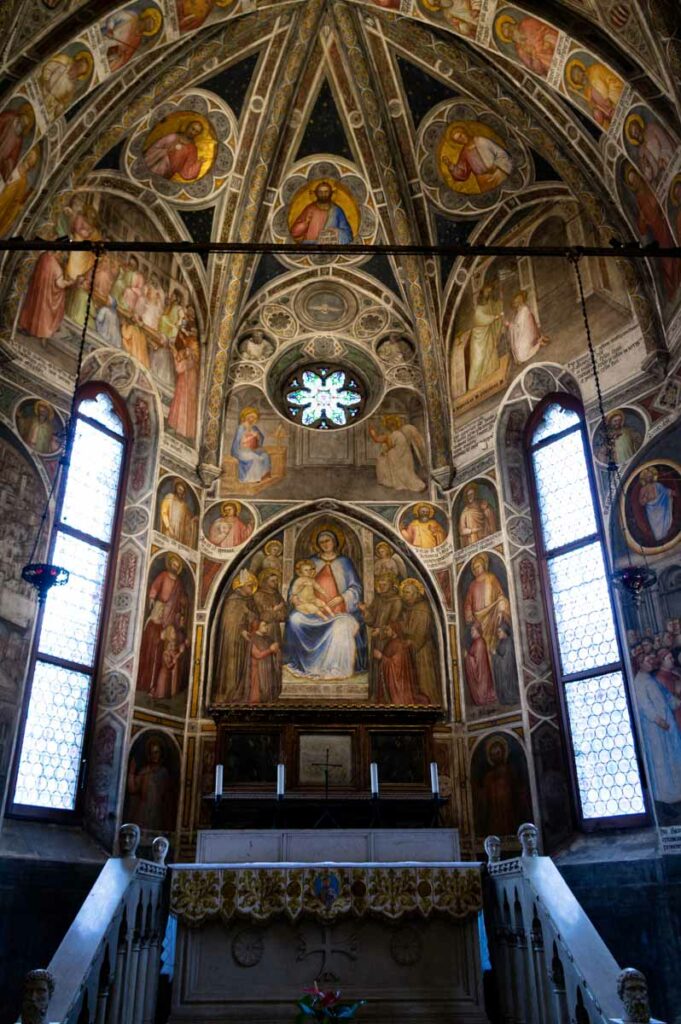
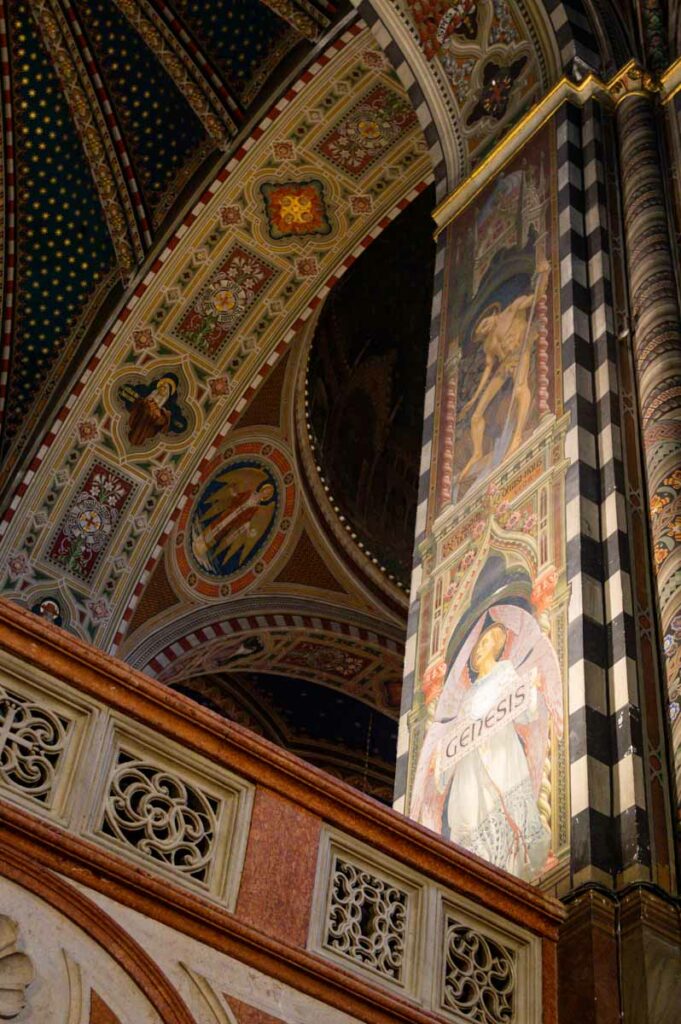
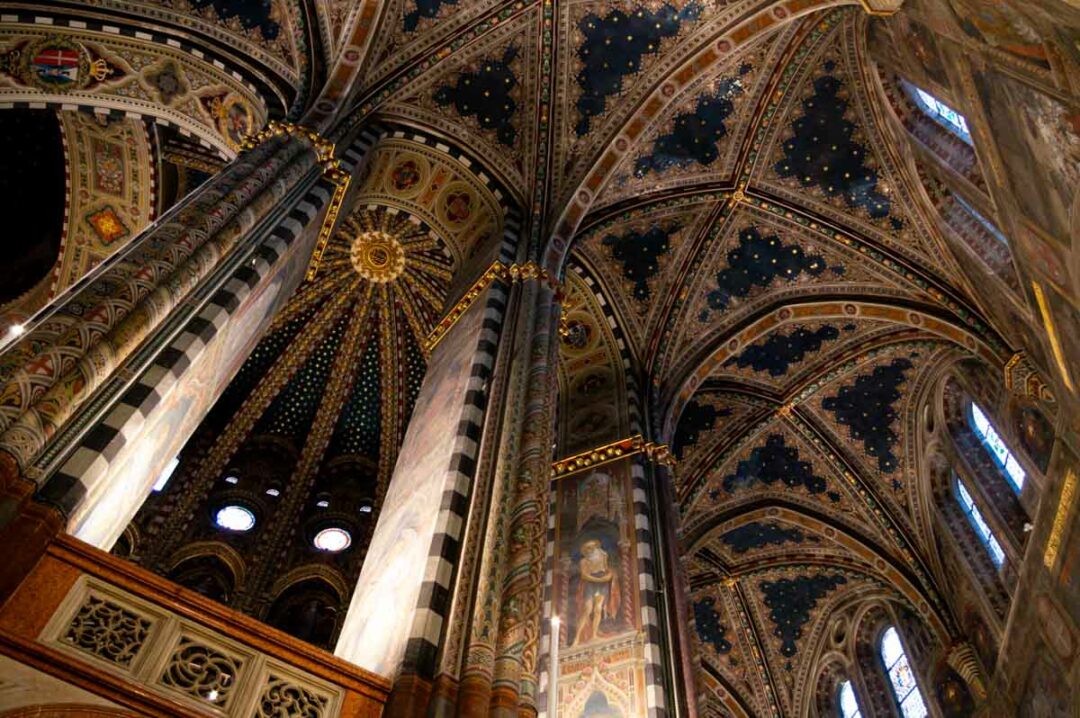
Basilica of St. Anthony of Padua there is the saint’s tomb. The location of the tombs is absolutely spectacular, all in marble and gilding.
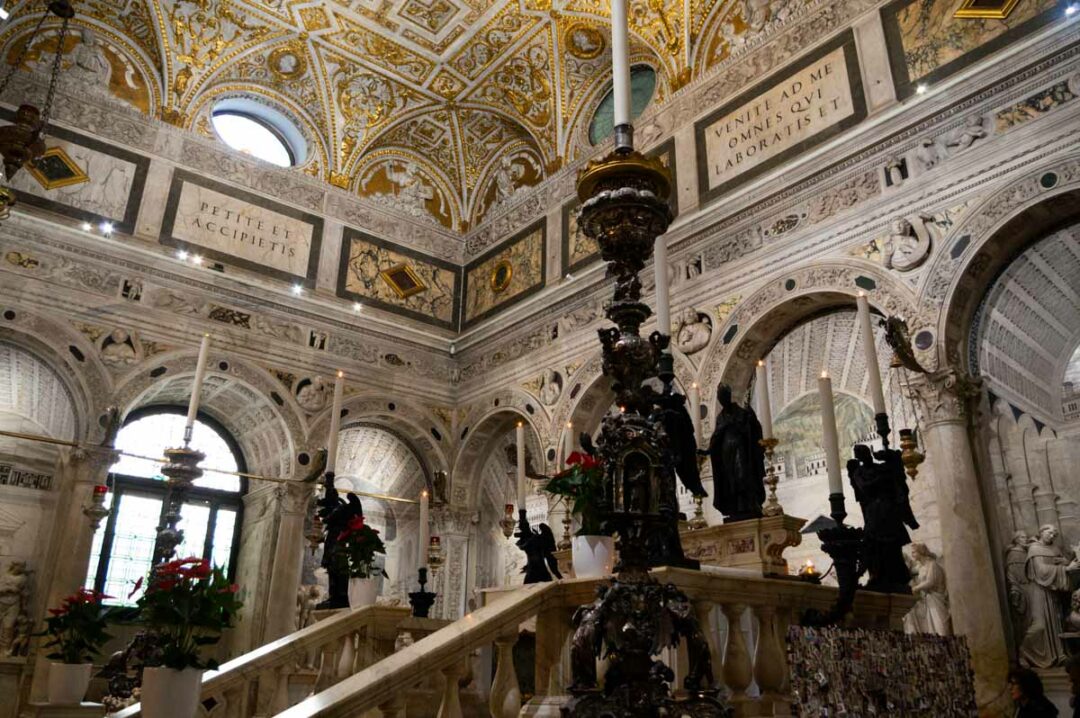
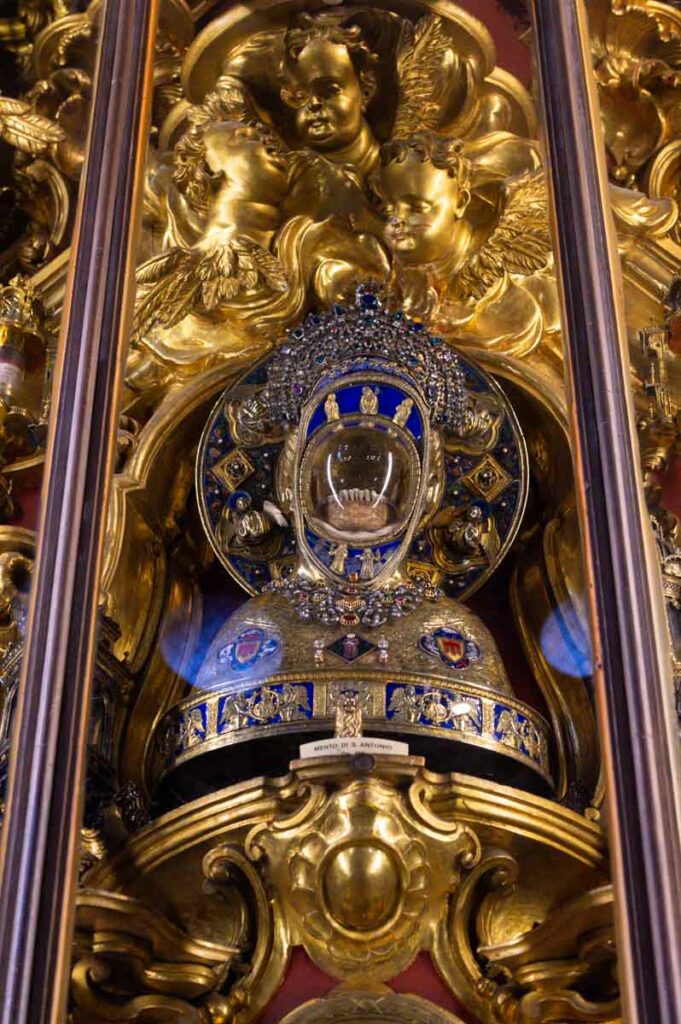
Next to the tomb is a room dedicated to keeping the relics of St. Anthony. Mostly, we only see the reliquary boxes, but here we really see St. Anthony’s beard and tongue. It’s pretty special, we say! Sensitive souls refrain!
Every year, thousands of pilgrims come to worship these relics and the remains of the saint. February was a good time to visit as there were really few people.
The monumental site of Prato delle Valle
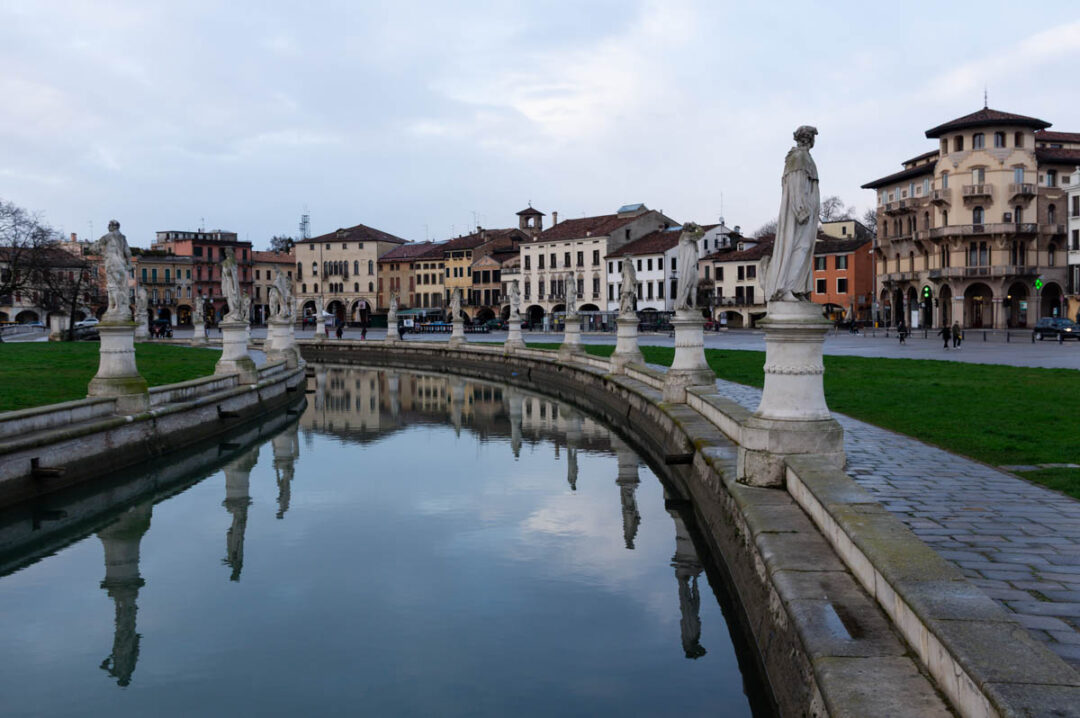
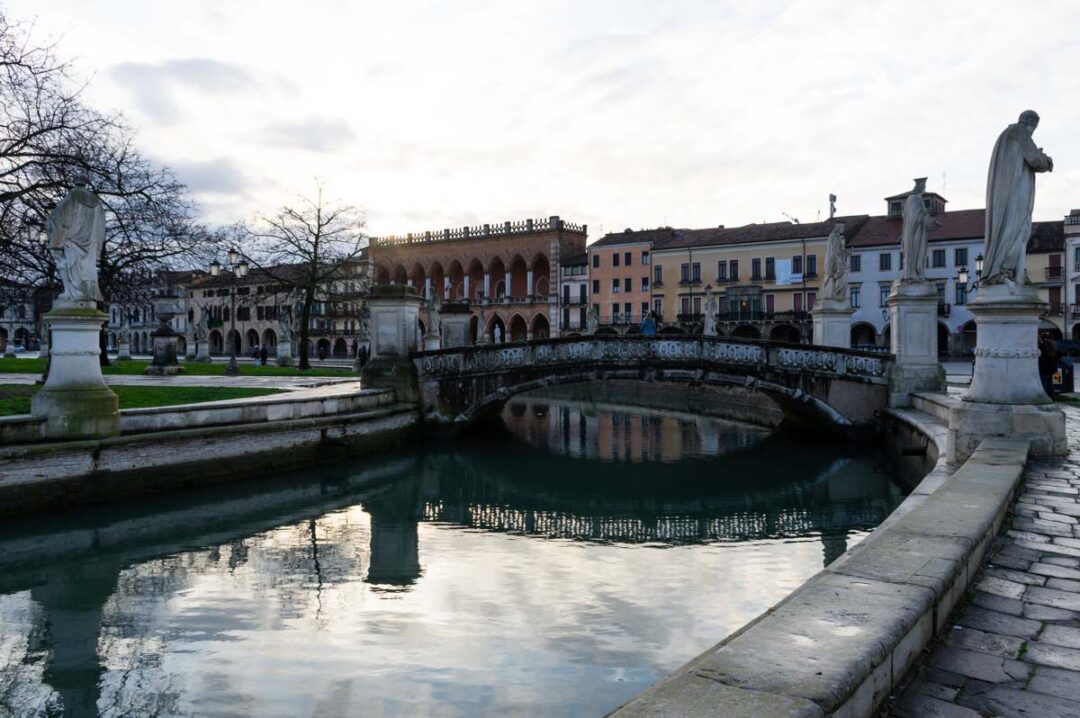
I use being south of the city center to go to monumental place du Prato delle Valle. It covers more than 90,000 m² the largest square in Italy.
This spectacular square is located a few minutes’ walk from the Basilica of St. Anthony and has a special feature ornamental channel in its center punctuated by numerous statues.
Visit the historic center of Padua on foot
After walking through the square of Prato delle Valle and looking at the neighboring Abbey of Sainte Justine, I return to the historic center of Padua for a tour of the historic center. In February, the days are still quite short, so I run around a bit to see as much as possible before nightfall.
University of Padua
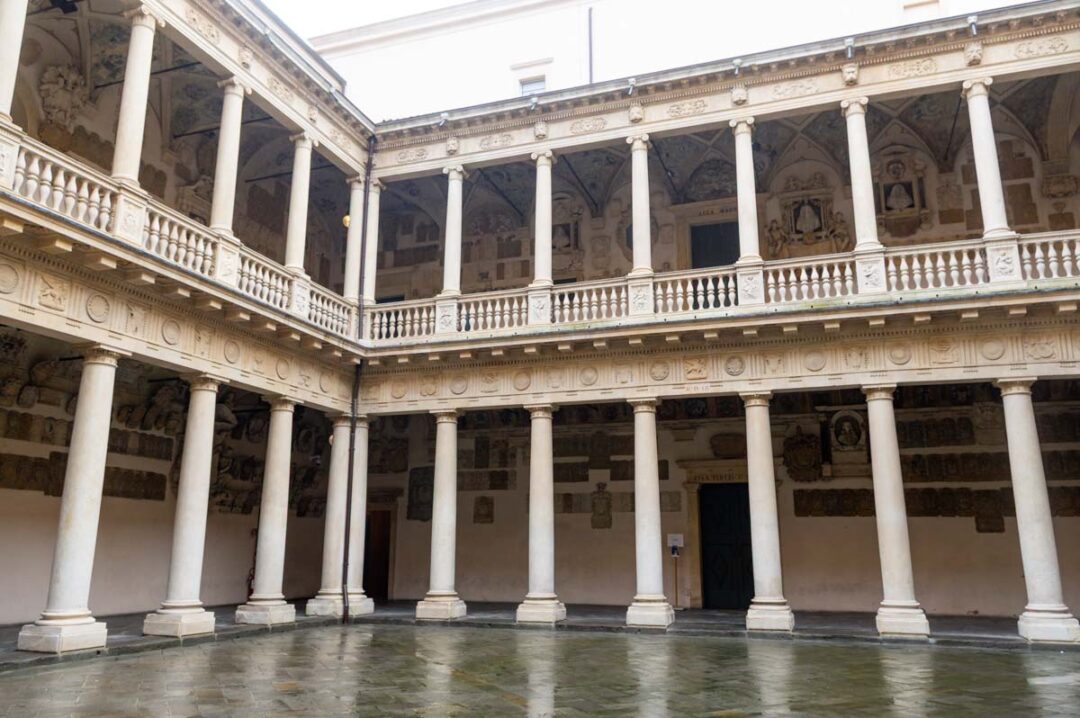
University of Padua is one of the oldest in Europe. This university was founded in 1222 by professors and students who fled the University of Bologna due to attacks on academic freedom.
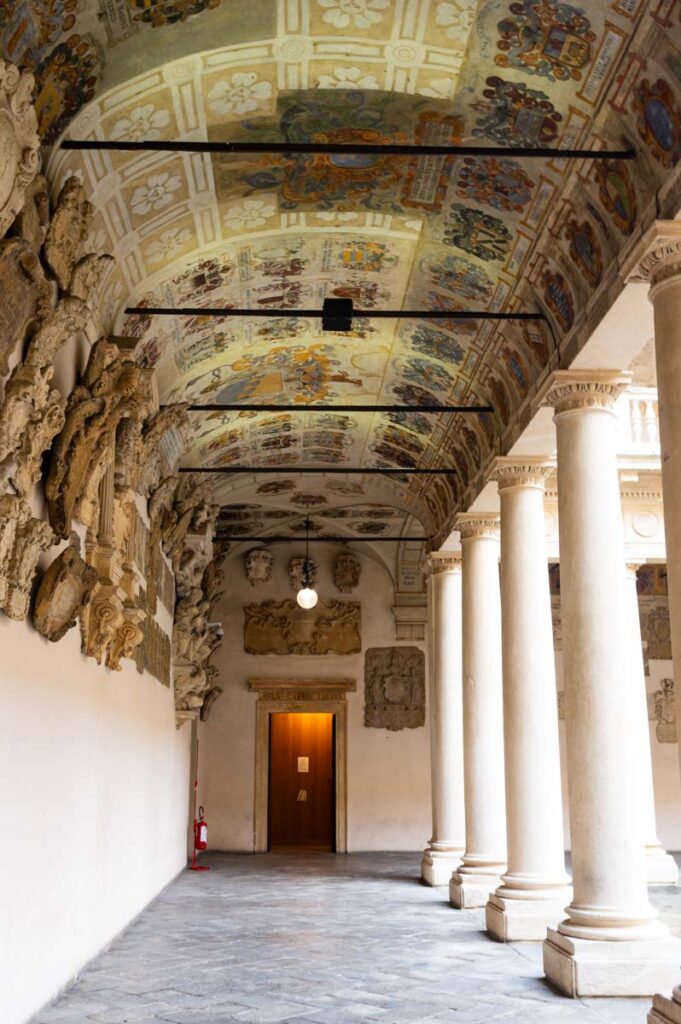
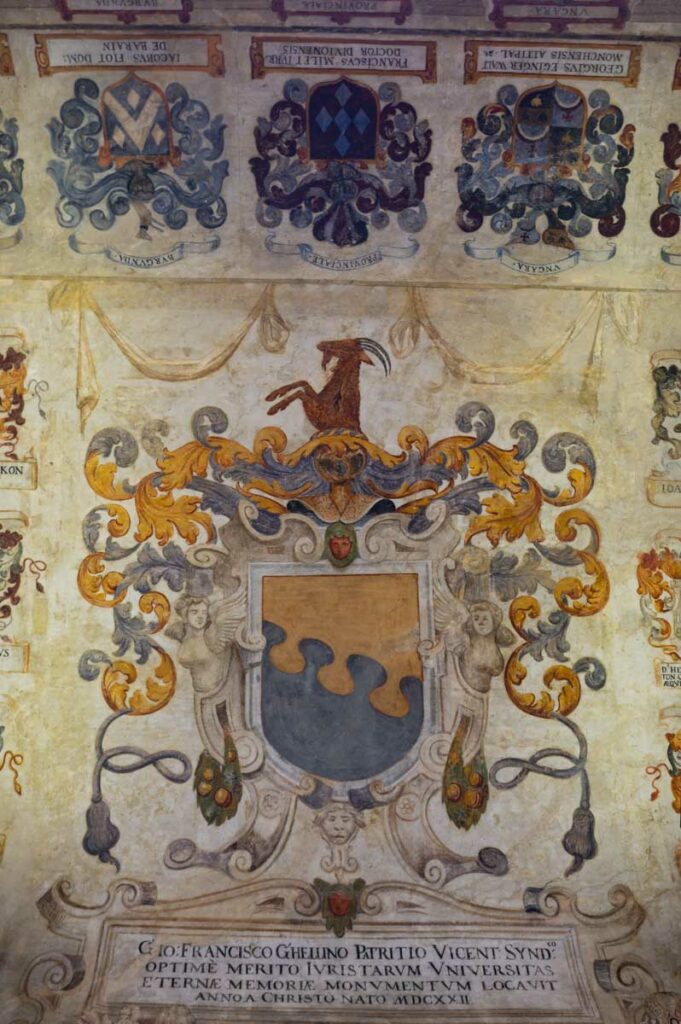
University of Padua is partially open to visitors. After visiting Bologna, it is clear that it is a visit I would have liked to have done if I had had a little more time. This time I just admired the building from the outside. Do not hesitate to enter the inner courtyard, which is decorated with numerous coats of arms.
The Jewish ghetto in Padua
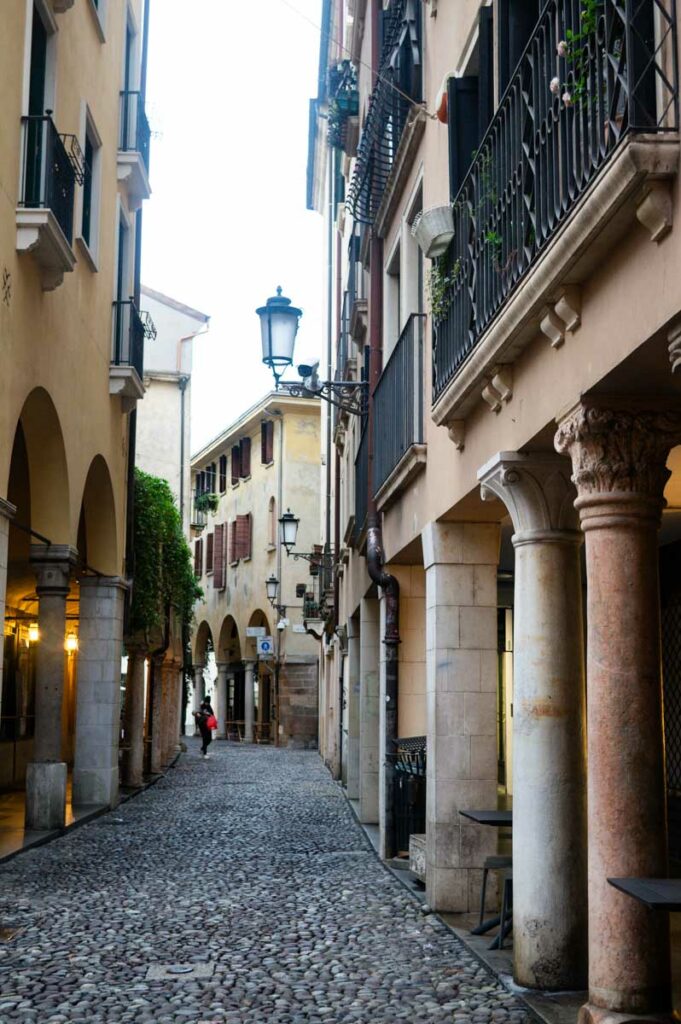
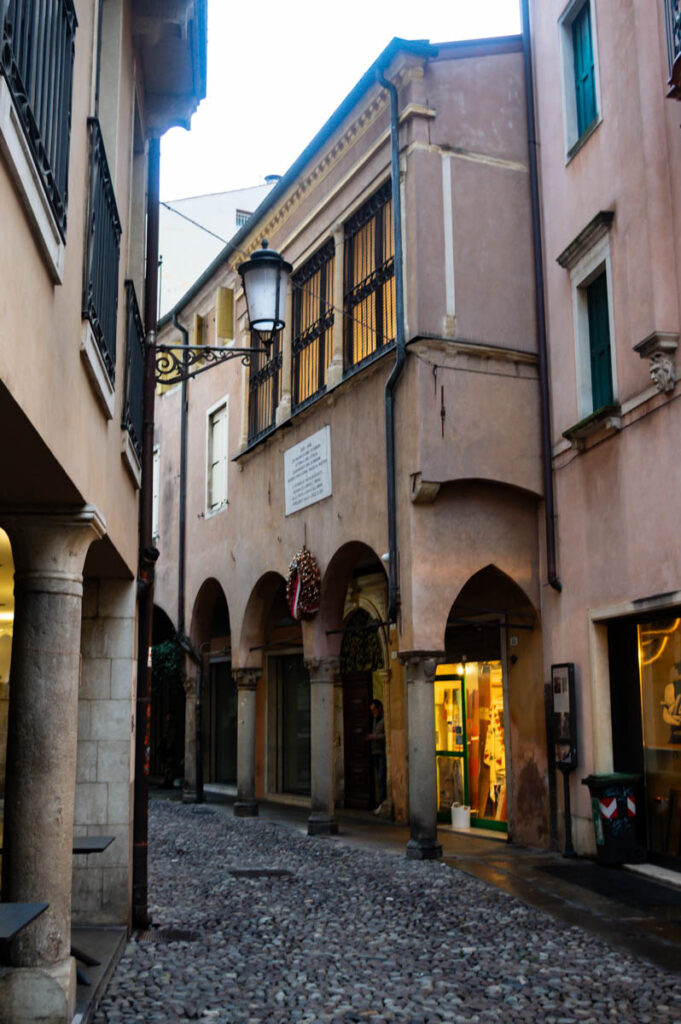
The The Jewish ghetto in Padua is a collection of small narrow streets located between the university and the Duomo.
It is no coincidence that this district borders the university because unlike other universities in Europe, Padovanski welcomed all students regardless of their religion.
This neighborhood, which today is one of the most pleasant parts of the historic center, has a rich history because it was marked by the segregation policy implemented by the Republic of Venice between 1603 and 1797.
Cathedral Square
Then I head towards the cathedral (Duomo) in Padua, not to be confused with the Basilica of Saint Anthony. It is a brick Romanesque style church. This is the third building built on this location.
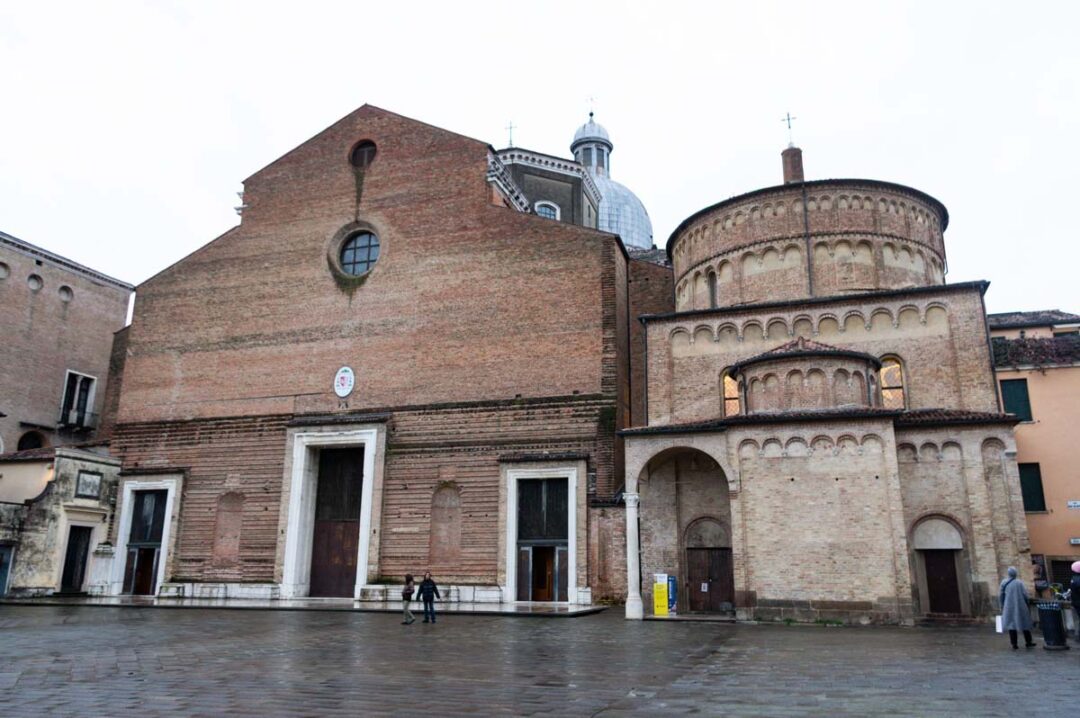
Unlike many religious buildings in Italy, the interior of Padua Cathedral is quite sober, completely painted in white.
The extraordinary squares of the historic center of Padua
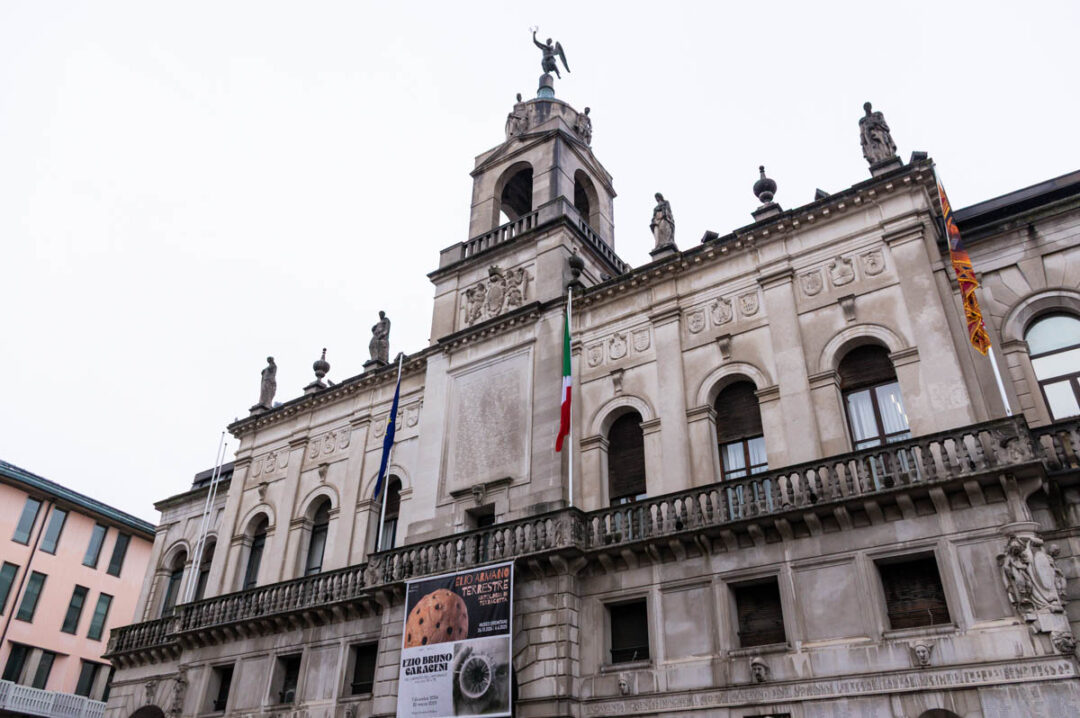
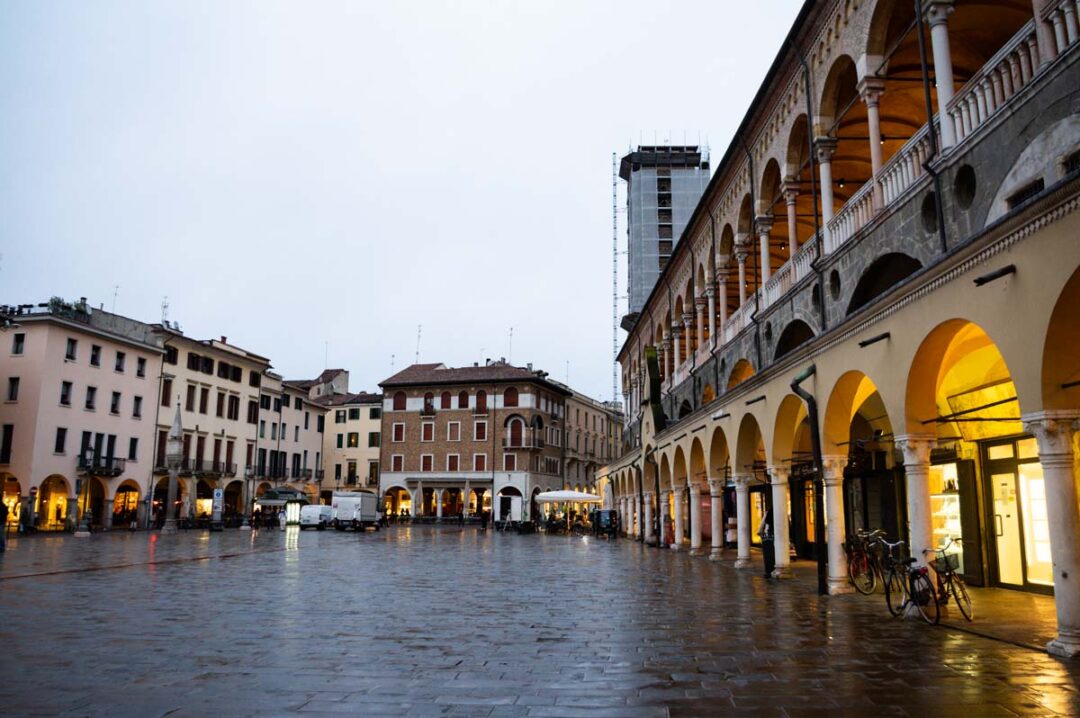
The historical center of Padua is organized around several squares to discover. It’s the first Piazza dei Signori with its superb Clock Tower.
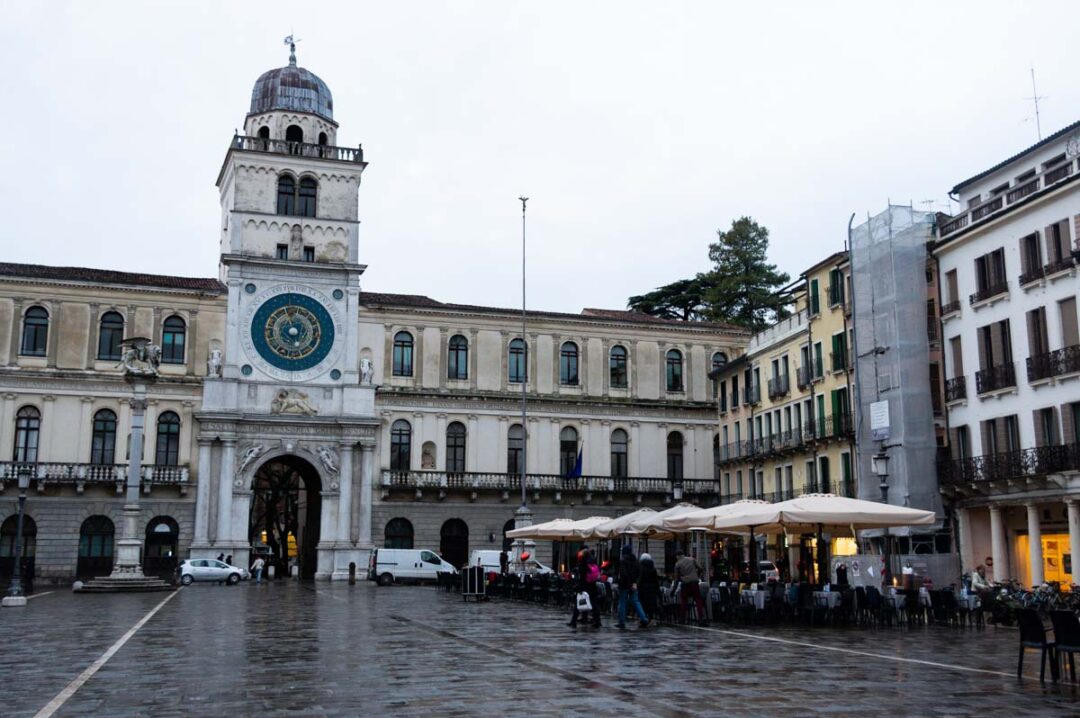
On both sides Palace of the region There are two other exceptional places:
- Fruit square
- and Piazza delle Erbe
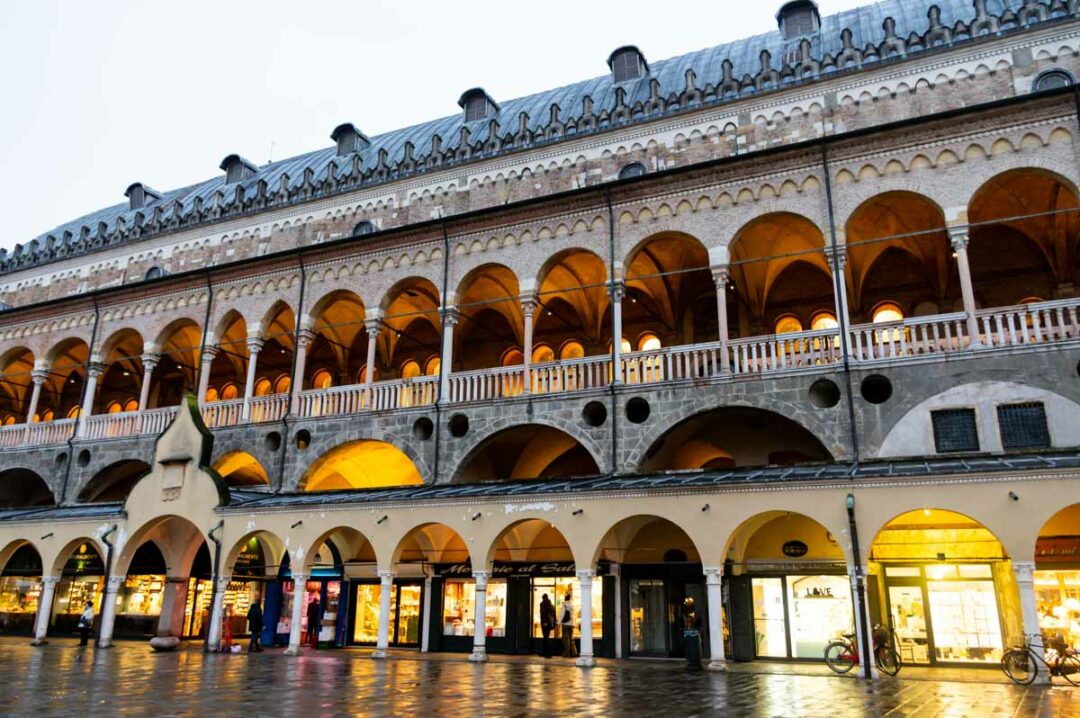
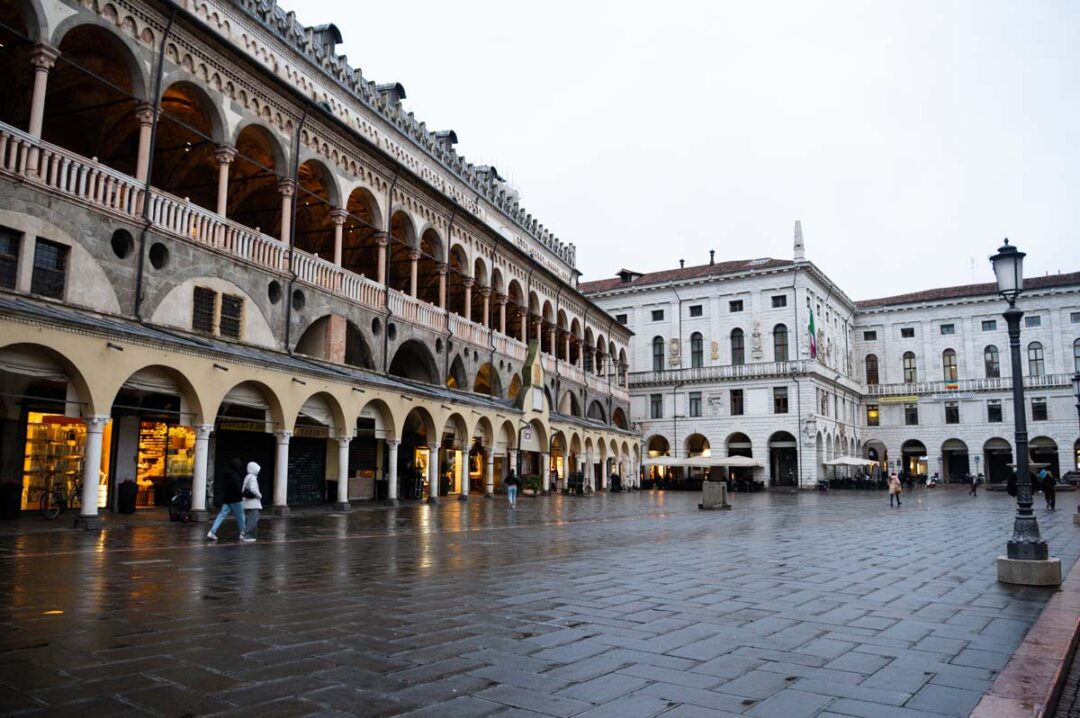
The Palace of the region is a public building typical of northern Italy. Built between the Middle Ages and the Renaissance, these buildings were the center of local civic life and administration and served in particular as a courthouse.
There are boutiques and food stores on the ground floor of the building.
I didn’t get to go around the building, which is most famous for having the world’s largest “hanging room” on the first floor, which has an extraordinary ceiling in the shape of an inverted boat hull and whose walls are decorated with frescoes. In short, I will have to come back!
What else to see in Padova?
Time of my visit Padua was very limited. I only had a few hours to spend there, although the city deserves at least a full day’s visit. Here are some more must-sees in Padua, which I didn’t have time for, and which I recommend if you have more time:
- Chapelle des Scrovegnia small chapel from the 14th century with frescoes by Giotto,
- Musei Civici of Padua (included in the entrance to the chapel), which includes an archaeological museum, a medieval museum and a museum of modern art.
- botanical garden of Padua which is the oldest in the world.